4-7-8 Wind-Down Breath: Five Minutes Before Sleep
The 4-7-8 pattern gives more than half of every cycle to the exhale, and the exhale is the half that leans on the parasympathetic branch of the nervous system. Five minutes buys you four complete rounds plus a settling minute. The aim is to finish slower than you started, not to hit a count.
- Length 5 min
- Rhythm Inhale 4 · Hold 7 · Exhale 8
- Posture Seated on the edge of the bed or a chair, both feet flat, tongue resting behind the upper front teeth.
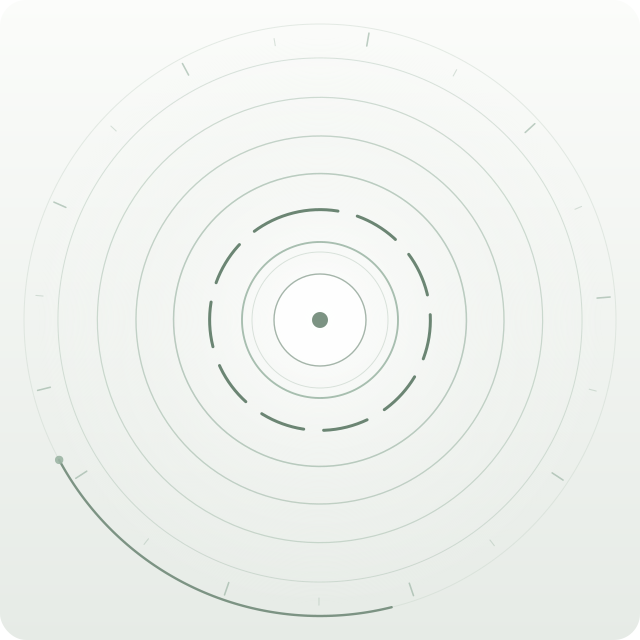
How to run this practice
One step per part of the cycle, with the count marked. Start at the top; if the step you are on is longer than three sentences, that is normal — the instruction is just unusually specific.
-
Settle
Sit on the edge of the bed or a chair with both feet flat on the floor. Let the spine stack itself rather than holding it stiff — a tall, soft back takes air more easily than a rigid one.
-
Tongue and jaw
Rest the tip of the tongue lightly behind the upper front teeth and leave it there for the whole practice. It keeps the jaw slack and stops the throat from closing on the hold.
-
Exhale 8 — empty out
Exhale first, all the way out through the mouth. Beginning from empty is what lets the first inhale arrive cleanly instead of landing on top of stale air.
-
Inhale 4
Inhale quietly through the nose for four. Do not fill to the brim; about seventy per cent is plenty and it keeps the seven-count hold comfortable.
-
Hold 7 · Exhale 8
Hold for seven, then exhale through slightly parted lips for eight. That is one round. Take four rounds, then release the count and simply watch the breath for the last minute.
Why this pattern is used
- Extends the exhale well past the inhale, which is the mechanical lever behind a slower heart rate.
- Gives a restless mind a counting job that is easy enough to hold and busy enough to crowd out tomorrow's rehearsal.
- Needs no equipment, no app and no light, so it fits the stretch between lying down and falling asleep.
- Scales down cleanly: shorten every count to three, five and six when the full pattern starts to feel like effort.
Read before you practise
- Skip the hold if you are pregnant, or if you live with uncontrolled high blood pressure, glaucoma, or a recent eye or abdominal operation. Breathe 4 in and 8 out instead.
- Stop and breathe normally if you feel light-headed. Dizziness in the first week almost always means the counts are longer than your current capacity.
- Do not practise this one while driving or while standing.
This page is informational only and is not medical advice, diagnosis or treatment. Stop at any point and breathe normally if something feels wrong.
Carry on with
 Breathing practice
The Extended Exhale Ladder: Doubling the Out-Breath
A one-to-two ratio between inhale and exhale is the simplest ratio in breath work and the easiest to remember when you are already tired.
 Breathing practice
Belly Tide: Diaphragmatic Breathing With a Longer Exhale
Most adults breathe into the upper chest without knowing it, which keeps the diaphragm shallow and the neck and shoulder muscles doing work they were never meant to do all day.
 Breathing practice
Box Breathing in Three Minutes: A Square to Hold On To
Box breathing draws four equal sides — in, hold, out, hold — and the symmetry is the whole trick.