Box Breathing in Three Minutes: A Square to Hold On To
Box breathing draws four equal sides — in, hold, out, hold — and the symmetry is the whole trick. Because no side is longer than another, there is nothing to anticipate, and a mind that would otherwise be running commentary has only the next side of the square to wait for. Three minutes is roughly nine squares.
- Length 3 min
- Rhythm Inhale 4 · Hold 4 · Exhale 4 · Hold 4
- Posture Any stable seat. Forearms resting, eyes soft or closed, shoulders dropped away from the ears.
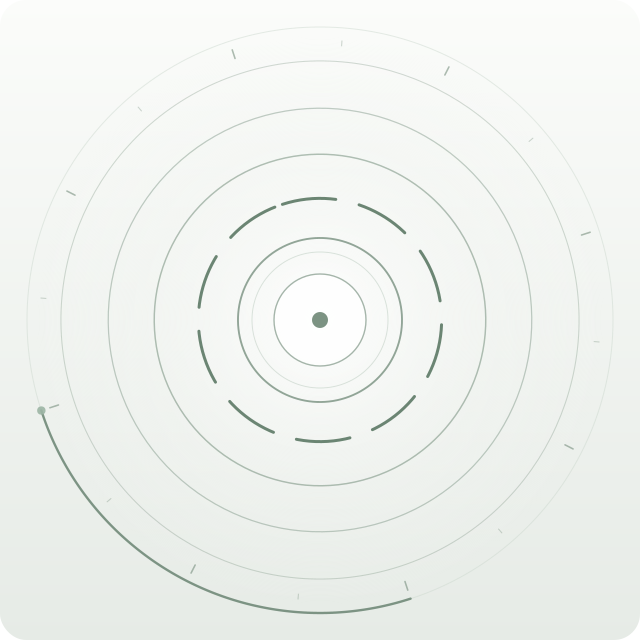
How to run this practice
One step per part of the cycle, with the count marked. Start at the top; if the step you are on is longer than three sentences, that is normal — the instruction is just unusually specific.
-
Settle
Sit anywhere stable and let the shoulders drop. Spend the first three breaths just noticing them; there is no need to change anything yet.
-
Inhale 4
Inhale through the nose for a count of four, filling low first and letting the ribs widen after.
-
Hold 4
Hold for four. Keep the throat open and the face loose — a soft hold is one you could speak through if you had to.
-
Exhale 4
Exhale through the nose or mouth for four, letting the last of the air leave without pushing.
-
Hold 4 — empty
Hold the empty pause for four, then begin the next square. Count nine squares, then sit for three uncounted breaths before you get up.
Why this pattern is used
- The equal sides make the rhythm predictable, which is what lets attention settle without being asked to concentrate.
- Short enough to run before a difficult phone call, a meeting, or the first minutes of a commute.
- Works with eyes open, so it can be done at a desk without anyone around you noticing.
- The four-second exhale is long enough to slow the pulse noticeably but short enough to avoid breath hunger.
Read before you practise
- The bottom hold is the part people dislike. If it makes you tense, drop it and breathe in-4, out-4 until the rhythm feels ordinary.
- Keep the holds gentle — a hold is a pause in the breath, not a contest. Never strain or clamp the throat shut.
- Come out of the practice if you feel pressure building behind the eyes or in the ears.
This page is informational only and is not medical advice, diagnosis or treatment. Stop at any point and breathe normally if something feels wrong.
Carry on with
 Breathing practice
The Extended Exhale Ladder: Doubling the Out-Breath
A one-to-two ratio between inhale and exhale is the simplest ratio in breath work and the easiest to remember when you are already tired.
 Breathing practice
Belly Tide: Diaphragmatic Breathing With a Longer Exhale
Most adults breathe into the upper chest without knowing it, which keeps the diaphragm shallow and the neck and shoulder muscles doing work they were never meant to do all day.
 Breathing practice
4-7-8 Wind-Down Breath: Five Minutes Before Sleep
The 4-7-8 pattern gives more than half of every cycle to the exhale, and the exhale is the half that leans on the parasympathetic branch of the nervous system.