Belly Tide: Diaphragmatic Breathing With a Longer Exhale
Most adults breathe into the upper chest without knowing it, which keeps the diaphragm shallow and the neck and shoulder muscles doing work they were never meant to do all day. This practice rebuilds the low, wide breath and pairs it with a six-count exhale so the tide has somewhere to go.
- Length 5 min
- Rhythm Inhale 4 · Exhale 6
- Posture Lying on the back with knees bent, one hand on the lower ribs and one on the belly, or seated with a hand on the belly.
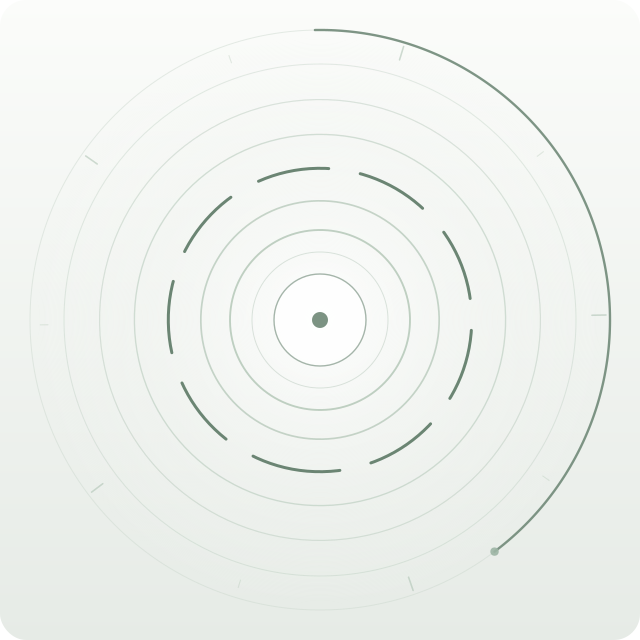
How to run this practice
One step per part of the cycle, with the count marked. Start at the top; if the step you are on is longer than three sentences, that is normal — the instruction is just unusually specific.
-
Set the hands
Lie down with knees bent and feet flat, or sit with the spine tall. Put one hand on the lower ribs and the other on the belly, so you can feel rather than guess.
-
Inhale 4
Breathe in through the nose for four. Aim the air low: the belly hand should rise first, and the ribs should widen sideways under the other hand.
-
Check the shoulders
Do not lift the shoulders. If the top hand moves more than the bottom one, the breath is still landing high.
-
Exhale 6
Exhale through the nose for six, letting the belly fall back towards the spine without pressing. Six is deliberately longer than four; that ratio is what does the work.
-
Five minutes
Continue for five minutes. In the last thirty seconds let go of the counting and let the body keep whatever rhythm it has found.
Why this pattern is used
- Puts the work back on the diaphragm, which is the muscle built for breathing and does not fatigue the way the neck muscles do.
- The longer exhale gently slows the heart and is often enough to interrupt a shallow, fast pattern mid-afternoon.
- Feeling the hand on the ribs gives immediate feedback, so you can tell whether the practice is actually working.
- Transfers easily to sitting and walking once you know what the low breath feels like from the inside.
Read before you practise
- If lying flat is uncomfortable late in pregnancy or with reflux, do the same practice seated or on your side.
- Do not push the belly out with the abdominal muscles. The belly should move because the diaphragm dropped, not because you pushed.
- Chest tightness during the first sessions usually means the exhale is being forced. Let it fall out instead.
This page is informational only and is not medical advice, diagnosis or treatment. Stop at any point and breathe normally if something feels wrong.
Carry on with
 Breathing practice
The Extended Exhale Ladder: Doubling the Out-Breath
A one-to-two ratio between inhale and exhale is the simplest ratio in breath work and the easiest to remember when you are already tired.
 Breathing practice
Box Breathing in Three Minutes: A Square to Hold On To
Box breathing draws four equal sides — in, hold, out, hold — and the symmetry is the whole trick.
 Breathing practice
4-7-8 Wind-Down Breath: Five Minutes Before Sleep
The 4-7-8 pattern gives more than half of every cycle to the exhale, and the exhale is the half that leans on the parasympathetic branch of the nervous system.